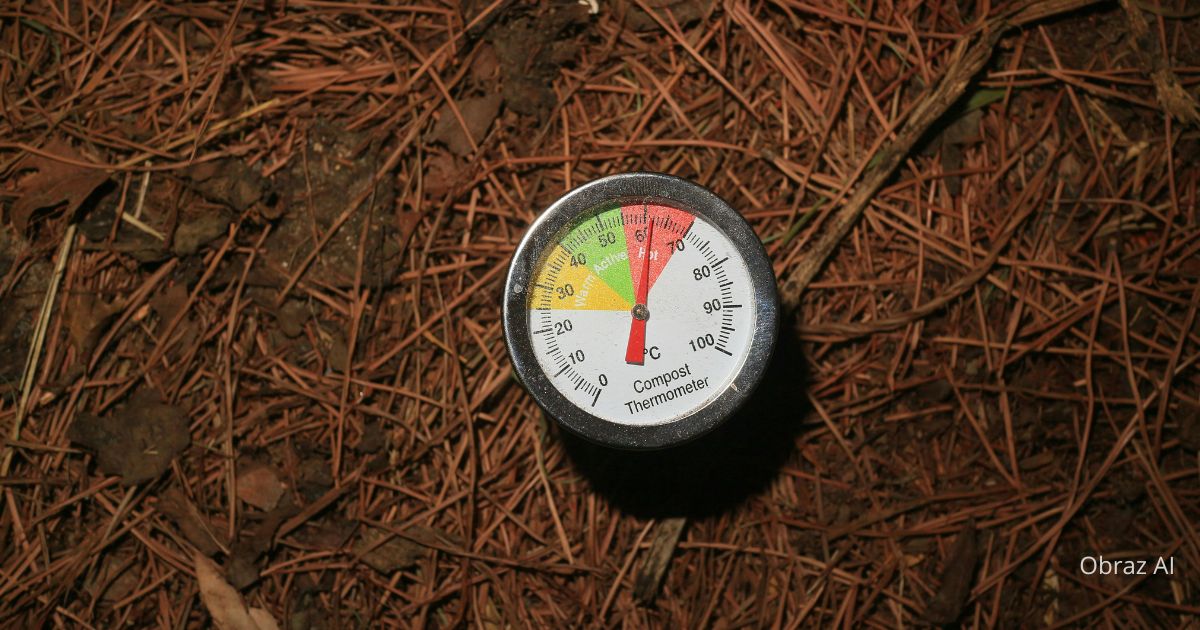
Temperature and oxygen availability are among the parameters used to assess the progress of composting and the aerobic stabilization of waste. Their values change over time, and conditions inside a compost pile or bioreactor may vary between individual measurement points. A single reading, therefore, does not reveal the full dynamics of the process. Only data collected on a regular basis allows us to observe the direction and rate of change.
Wireless measurement probes for composting enable the collection of data on selected process parameters and the transmission of that data to a monitoring system without the need to run a signal cable to each measurement point. Depending on the solution’s configuration, the data can be recorded, displayed to the operator, and used to signal deviations from the specified operating conditions.
We explain how such a system works, what roles the LoRaWAN, MQTT, and Modbus communication technologies play, and how data from the sensors can be transmitted to the SCADA system.
What do the sensors used in the composting process measure?
Measuring probes used during composting can monitor the temperature of the material and the oxygen concentration in the gas spaces within the composting mass. Both parameters provide information about the conditions of the biological process, but each describes a different phenomenon.
Measuring Compost Temperature
Temperature is one of the key indicators of biological activity during composting. The rise in temperature results, among other things, from the heat released during the microbial decomposition of organic matter.
Measuring the temperature of compost allows us to monitor the progress of the process over time. Of particular importance is not only the current temperature, but also the rate at which it rises, the duration of specific conditions, and the nature of changes during subsequent stages of the process.
Temperature data can help the operator assess whether the process is proceeding as planned. A sudden change in temperature may warrant checking other parameters, including aeration, material moisture content, or system operating conditions.
However, not every change in temperature indicates a problem. Interpreting the measurements requires taking into account the type of waste, the process phase, the probe’s location, and the technology used.
The placement of measurement points is also of significant importance. The temperature measured at a single location may not reflect the conditions throughout the entire volume of the material. Therefore, when designing a monitoring system, it is necessary to determine both the number of points and their locations.
Measuring Oxygen Concentration in Compost
Oxygen measurement allows for the assessment of oxygen availability in the gas phases of material undergoing composting or aerobic stabilization. This is important because the microorganisms responsible for the aerobic decomposition of organic matter require appropriate oxygenation conditions.
In systems that use forced aeration, measurements of oxygen concentration can serve as one source of information used to evaluate the performance of the ventilation system.
A drop in oxygen concentration at a specific point may indicate intense oxygen consumption by microorganisms, a restricted air supply, or uneven distribution of gas flow within the material.
However, the reading alone does not allow for an unambiguous determination of the cause. It may be necessary to compare it with the temperature, the aeration method, the material characteristics, and the history of previous measurements.
Measuring oxygen levels in compost is therefore diagnostically significant. It makes it easier to monitor the conditions of the process, but it does not replace a comprehensive technological assessment.
How does a wireless measurement probe work?
A wireless measurement probe records a selected process parameter, converts the result into a digital signal, and transmits the data via radio to the communication infrastructure. The information can then be sent to a master system, where it is stored, analyzed, and presented to the operator.
The basic system consists of a sensor, measurement electronics, a communication module, and an appropriate power source.
For probes designed for use inside compost piles, the device’s design is of particular importance. It should take into account the conditions in the measurement environment, including temperature, humidity, contact with the material being processed, and how the probe is operated.
For a system that uses wireless transmission, a typical information flow sequence might look like this:
- The sensor measures temperature or oxygen concentration.
- The probe's electronics process the result and prepare the data for transmission.
- The radio module transmits information to the communication gateway.
- The gateway transmits data to the master system via the appropriate network infrastructure.
- The monitoring system records the results and makes them available to the operator.
- The software can compare readings with established thresholds and generate alarm messages.
In practice, individual components may be implemented using different devices and protocols. The architecture depends on the probe manufacturer, the existing automation system, and the requirements of the specific installation.
How often can the probe take measurements?
The frequency of measurements and data transmission depends on the device configuration and process requirements. Do not assume that all wireless probes operate at the same interval.
When selecting the interval, one should take into account the nature of changes in the monitored parameter, data timeliness requirements, the transmission method, and available power.
It is also important to distinguish between the frequency of measurements and the frequency with which they are transmitted. The device may store the results locally and transmit them to the system at a different interval, if its design allows for it.
LoRaWAN in a Waste Management System – Why Is Wireless Communication Used?
LoRaWAN (Long Range Wide Area Network) is a wireless communication technology designed to transmit relatively small amounts of data from measurement devices and other Internet of Things (IoT) devices. It can be used in industrial monitoring systems where devices are spread out over a large area.
In the case of composting facilities, wireless communication reduces the need to run signal cables directly to the probes embedded in the material.
This is particularly important in situations where measurement points may change location as the process is organized.
What does the absence of signal cables mean?
In a traditional wired system, the sensor must be connected to an appropriate input module or controller. Depending on the layout of the measurement points, it may be necessary to route cables, secure the wires, and take their presence into account when servicing the system.
A wireless probe does not require a permanent communication cable between the measurement point and the data collection system.
However, this does not mean that the infrastructure is completely eliminated. Gateways, a connection to the master system, and a properly designed power supply for the devices are still needed.
In practice, the absence of a signal cable may make it easier to relocate the probe, but the ability to move it also depends on its mechanical design, installation method, and operating procedures.
Does LoRaWAN provide connectivity throughout the entire facility?
No. The range of radio communication depends on many factors, including the placement of gateways, the design of buildings, the presence of obstacles, and signal propagation conditions.
In waste management facilities, consideration must be given to, among other things, steel structures, reinforced concrete partitions, process equipment, and the location of measurement points.
For this reason, it may be necessary to assess radio conditions and plan the deployment of communications infrastructure accordingly before implementing the system.
The range specified for a device does not, by itself, determine the quality of the transmission in a specific location.
How does data from the sensors get into the SCADA system?
Data from wireless sensors can be transmitted to the SCADA system via a communication gateway and appropriate data exchange protocols. SCADA (Supervisory Control and Data Acquisition) is a system for monitoring, visualization, and data collection used in industrial automation.
In this architecture, different technologies are responsible for different stages of information transmission.
Element
A feature in the monitoring system
Measuring probe
It records the temperature or oxygen concentration at a selected point
LoRaWAN
It enables wireless communication between the device and the network infrastructure
Communication gateway
It receives radio transmissions and forwards the data to downstream infrastructure
MQTT
It can be used to transmit measurement data between system components
Protocol Translator
Converts data into a format supported by devices or host software
Modbus
It enables data exchange with properly configured automation devices
SCADA
It displays measurements, archives data, and can handle alerts
What is the function of MQTT?
MQTT (Message Queuing Telemetry Transport) is a communication protocol used, among other things, in IoT systems, or the Internet of Things.
It works by transmitting messages between devices and applications via a message broker.
In a composting monitoring system, MQTT can be used to transmit data received by the LoRaWAN infrastructure to the software responsible for its further processing.
Why is Modbus used?
Modbus is a communication protocol widely used in industrial automation. It enables the exchange of data between measuring devices, controllers, and master systems.
If the existing automation system uses Modbus, the data from the sensors may need to be converted accordingly.
In such cases, an intermediary solution is used, which retrieves information from one system and makes it available in a format that meets the requirements of the other.
An example architecture might include LoRaWAN transmission, data forwarding via MQTT, and sharing selected values via Modbus.
This is not the only possible method of integration. The final design should be based on the equipment available at a specific facility.
Can data be stored during connectivity outages?
Some measurement systems allow results to be cached locally and then transmitted once communication is restored.
It is important for the operator to distinguish between a temporary loss of transmission and an actual lack of measurement. The system should allow the operator to verify the timeliness of the displayed data so that a historical reading is not mistakenly interpreted as the current process status.
How does monitoring temperature and oxygen levels benefit the plant operator?
Temperature and oxygen monitoring allows the operator to observe changes in biological process parameters, analyze their history, and identify deviations that require investigation. Measurement data can support operational decisions, including the assessment of aeration conditions.
The most important difference compared to a single reading is the ability to access information about how the process evolves over time.
Monitoring trends rather than individual values
A measurement result reflects the condition at a specific point in time. A series of results, however, makes it possible to determine whether the temperature is rising, remaining at a similar level, or gradually decreasing.
The same applies to oxygen concentration. Analyzing successive readings can reveal whether a change is short-term or persists over a longer period.
The measurement history also helps compare the progress of successive production cycles, provided that differences in material type and process conditions are taken into account.
Anomaly Detection and Alerts
The monitoring system can compare current readings with established reference values and notify the operator when defined thresholds are exceeded.
An alarm does not necessarily indicate a system malfunction. It may signal a situation that requires further inspection, such as checking the operation of the aeration system or verifying the accuracy of the measurement.
Threshold values should be based on the technical specifications and characteristics of a specific process. Uniform settings should not be applied without taking into account the type of material being processed and the stage of composting.
Support for Aeration Assessment
In systems equipped with a forced aeration system, data on temperature and oxygen concentration can be used to evaluate process conditions.
For example, a sustained decrease in oxygen concentration at a specific point may prompt the operator to check the air flow, fan operation, or material properties.
This does not automatically mean that the aeration intensity should be increased. The decision should take into account the other parameters and the operating characteristics of the specific system.
Depending on the system configuration, measurement data may be used solely for monitoring or may serve as one of the input signals for control algorithms.
Documenting the Process
Data archiving allows you to retrieve measurement history from a specific period.
This may be useful during technical analyses, operational inspections, and assessments of the causes of deviations.
It is worth noting that the recording of data does not automatically imply confirmation that all procedural or formal requirements have been met. The location of the measurement, its representativeness, the accuracy of the equipment, and the method of documenting the results are also important.
Continuous Monitoring vs. Manual Measurements – Key Differences
Continuous monitoring allows data to be collected regularly without the need for an employee to take a reading each time. Manual measurements, on the other hand, can serve a control, diagnostic, or supplementary function.
Both methods have specific applications and are not necessarily mutually exclusive.
Criterion
Automatic Monitoring
Manual measurements
Data Frequency
Regular readings according to the system configuration
Readings taken during scheduled inspections
Reaction to the change
Ability to automatically detect anomalies upon receiving data
The change is detected during the next measurement
Measurement History
Automatic saving of results in the system
Requires manual registration or data entry
Availability of Information
Remote preview available in the master system
It depends on how the readings are recorded
Relocation of a measurement point
Depends on the probe's design and installation method
Possible when using an appropriate portable device
Validation
Requires diagnostics, maintenance, and periodic verification of sensors
It requires a properly functioning instrument and correct measurement procedures
Does automated monitoring eliminate the need for manual checks?
No. Automating data collection reduces the need for routine readings, but it does not replace all monitoring activities.
Sensors require proper maintenance, and results that deviate from expectations may need to be verified using an independent instrument.
Manual measurements can also be useful when identifying differences between individual sections of a pile, checking the operation of probes, and performing process inspections not included in the standard measurement system.
Where can composting sensors be used?
Wireless measurement probes can be considered for use in various biological waste treatment systems, provided that their design, measurement range, and communication method are suitable for the operating conditions.
Monitoring of compost piles
In processes conducted in heaps, measuring temperature and oxygen levels allows us to monitor the conditions inside the material.
The ability to move the probe between points can be useful in installations where the process requires changing the measurement locations.
The use of a specific device should take into account how the piles are formed, how they are handled, and the risk of mechanical damage to the probes.
Bioreactor Monitoring
In bioreactors, measurement data can aid in the evaluation of biological process conditions, particularly when forced aeration is used.
However, the feasibility of using wireless probes depends on the structure of the facility, radio communication conditions, and the method used to insert the sensors into the material.
Monitoring of the biological section of the MBP system
In aerobic waste stabilization processes, measurements of temperature and oxygen concentration can be part of a process monitoring system.
The specific selection of measurement points depends on the process configuration, the design of the system, and the method used to aerate the material.
How do you choose a wireless measurement system suited for composting facilities?
The selection of the system should take into account both the measurement requirements and the operating conditions, as well as how it will be integrated with the existing automation system.
It is not enough to simply state that a device measures temperature or oxygen concentration. You must also verify that it can operate in the environment of a specific installation and provide data of the required quality.
Probe Design and Durability
Equipment placed in compostable material may be exposed to moisture, dirt, fluctuating temperatures, and mechanical stress.
AK NOVA Solutions:
- are made of AISI 316 steel;
- Their IP rating is IP67;
- are powered by batteries or rechargeable batteries;
- They allow for several weeks of operation on a single set of batteries.
Accuracy and representativeness of measurements
When selecting probes, consider the required measurement range, accuracy, calibration method, and the conditions under which the manufacturer specifies the device’s parameters.
Equally important is the representativeness of the measurement point. Even a highly accurate sensor will not provide a complete picture of the process if its location does not align with the purpose of the monitoring.
The system design should therefore include both the selection of equipment and the determination of measurement locations.
Power Supply and Transmission Frequency
In wireless devices, the power supply method affects how the system is operated and maintained.
More frequent transmission may increase energy consumption; therefore, measurement and communication intervals should be selected based on the process requirements and the device's capabilities.
It is also necessary to specify how the operator is to be notified of low battery levels and loss of communication.
Integration with the existing automation system
Before implementation, it is necessary to determine which control and visualization systems are already in use at the facility.
Key factors include supported protocols, data structure, archiving capabilities, and alarm management policies.
Depending on the configuration, you may need a communication gateway, additional software, or a protocol translator.
In a nutshell: How does a wireless composting monitoring system work?
The wireless monitoring system connects measuring devices to the communications infrastructure and software that enables data analysis.
- Measurement: The probe measures the temperature or oxygen concentration at a selected point in the process.
- Transmission: The result is transmitted wirelessly to the communication gateway.
- Data transmission: The information is sent to a higher-level system, such as a SCADA system or a monitoring platform.
- Visualization and Alarms: The system records measurement history, displays results, and can alert users when set thresholds are exceeded.
- Operator decision: The operator analyzes the data and, based on that analysis, assesses the progress of the process and the need to perform specific operational tasks.
A key function of the system is to convert individual readings into a structured history of process parameters. This allows users to analyze not only the current state but also how it changes over time.
How does monitoring fit into AK NOVA's composting technology?
Monitoring the parameters of biological waste treatment is one aspect of overseeing the process. Its importance should be considered in relation to the technology, the aeration method, and the operational organization of the facility.
AK NOVA is developing its own technology NOVA-KOMPtechnology, used in biological waste treatment facilities. It includes technological solutions related to the operation and control of the aerobic process.
Measurement systems can support the monitoring of such processes by providing information about the conditions within the material. However, monitoring alone is no substitute for proper process design, a properly selected aeration system, or operating procedures.
When modernizing an existing installation, it is also important to determine whether the new measuring devices can be integrated into the existing automation system and what infrastructure changes will be required.
If you are planning to implement a monitoring system or modernize the biological section of your facility, it is worth analyzing the solution in the context of the entire process. The AK NOVA team combines expertise in design, technology, and implementation, which allows us to take into account both the measurement requirements and the facility’s operating conditions.
Please feel free to contact the AK NOVA team to discuss the details of your planned investment or the modernization of your biological waste treatment facility.
FAQ – Frequently Asked Questions
What do the sensors used in composting measure?
Measuring probes used during composting can measure the temperature of the material and the oxygen concentration in the gas phases. These parameters help assess the conditions of the biological process and monitor how they change over time.
Why is temperature measured during composting?
Temperature is one of the indicators of the activity of microorganisms that break down organic matter. Regular monitoring of temperature allows us to analyze the progress of the process, identify deviations, and document changes in process conditions.
Why is oxygen concentration important in the composting process?
Oxygen is essential for the proper progression of aerobic decomposition processes of organic matter. Measuring its concentration helps assess the oxygenation conditions of the material and can aid in controlling the aeration system.
Do composting sensors have to be connected by a cable?
No. There are solutions available that use wireless data transmission, such as LoRaWAN technology. In such a system, the sensor transmits the results to the communication infrastructure without a permanent signal cable connecting it to the master system.
How can data from sensors be fed into the SCADA system?
Data can be transmitted from the sensors to the communication gateway and then forwarded to the master system. Depending on the architecture, it is possible to use MQTT and Modbus protocols as well as intermediary software.
What is LoRaWAN, and why is it used in industrial installations?
LoRaWAN is a wireless communication technology used, among other things, in Internet of Things systems. It enables the transmission of small data packets from distributed measurement devices. Its suitability depends on radio conditions and the requirements of a specific facility.
Can the wireless probe be moved between columns or bioreactors?
This may be possible if the probe’s design, installation method, and communication conditions allow for a change in location. However, not all devices have this capability. The ability to relocate probes used in a specific solution must be confirmed by the system supplier.